


Endless rows of product components from multiple suppliers with fluctuating prices, varying invoice formats, and manual data entry and invoice handling processes leave manufacturing businesses with unique accounts payable (AP) challenges.
A common thread among mismatched invoices, data errors, payment delays, and financial inefficiencies is tied to manual processing. These pain points hinder accurate financial forecasting, budgeting, and planning.
Advanced technology such as AI-powered automation can help manufacturers significantly reduce human-related errors while streamlining operations. With a plethora of software providers currently available, the journey to finding the perfect partner might be a long, winding one.
This blog aims to simplify your journey by providing a comprehensive overview of some of the leading AP software providers serving the manufacturing sector.
Read more:The Role of Accounts Payable Automation Across Sectors

Understanding accounts payable challenges in manufacturing
Manufacturing businesses manage more than two handfuls of products daily; each requires several parts and components from separate suppliers. Thus, a complete product might need multiple invoices for different raw materials. However, these invoices arrive in a variety of formats, currencies, and prices, which change based on volume and seasonal factors, adding more complexity to the entire process.
This combines with the following pain points plague manufacturing AP departments:
- • Human errors caused by manual data entry processes (for example, inputting the wrong order number or invoice amount)
- • Mismatched invoices and purchase orders, leading to unwanted disputes
- • Overwhelming amount of invoice volumes plus manual processes causing approvals to be delayed
- • Complex payment terms between manufacturers and suppliers
- • A diverse range of suppliers, each with their own requirements for invoices, payment terms, and payment systems, further complicates the procurement processes
- • Inefficient AP processes impact the company’s finances, causing a lack of visibility, hindering financial forecasting, budgeting, planning, and more
- • Disconnection between the manufacturer’s AP/ finance solution and existing ERP system, thus data silos are unavoidable
Manual processing is a common thread among these challenges. Accounts payable requires more than just high-level accuracy to be effective. Advanced technology such as AI-powered automation can help manufacturers significantly reduce human-prone errors while streamlining and enhancing overall efficiency.
Top accounts payable automation solutions breakdown
Software providers have developed different approaches to AP automation in manufacturing. Each solution comes with specific features that meet various operational needs.
Yooz
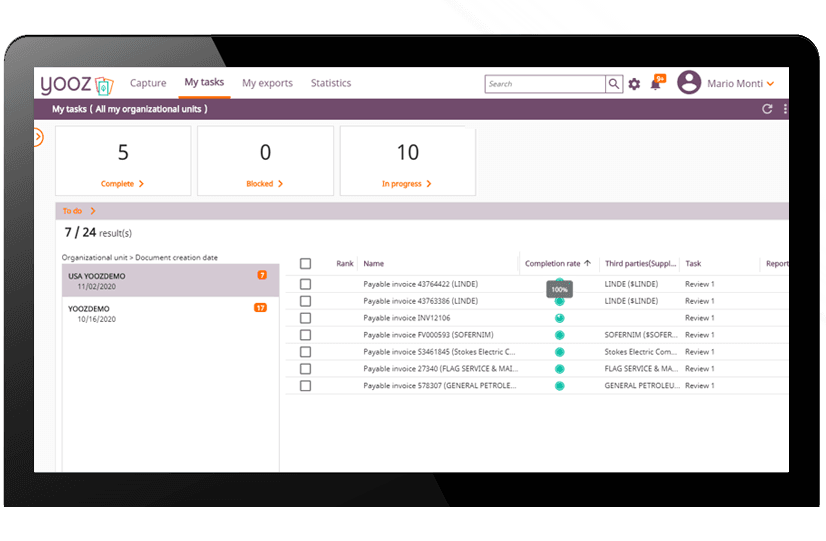
Yooz delivers a cloud-based purchase-to-pay automation solution. The platform serves more than 5,000 customers and 300,000 users globally. The system combines Artificial Intelligence, Deep Learning, and Robotic Process Automation to simplify the entire accounts payable workflow.
“Since implementing Yooz for our five-store dealership group, the invoice processing time has been reduced by 50%, the cost associated with cutting checks has decreased by 75%, saving us nearly $35,000 a year, and our GMs have complete visibility into our AP process.” — Jeremiah Heisey, Financial Controller, Beyer Mechanical
Key benefits manufacturers can expect:
- • AI-powered automation achieving 80% invoice processing without configuration
- • Built-in three-way matching capabilities
- • Automated approval workflows
- • Integration with over 250 financial and ERP systems
- • Up-to-the-minute visibility and reporting capabilities
- • Reduction in AP processing costs by up to 80%
- • Better supplier relationship management with vendor performance analytics
- • Centralised document management for supplier communications
- • Fraud detection and compliance features
- • Custom alerts and notifications for critical deadlines, preventing late payment penalties
Read more:Powering the Future of Procure-to-Pay: TRG Teams Up with Yooz
The system maintains accurate digital records and secure document storage to meet compliance requirements. Intelligent workflows adapt to manufacturing businesses’ specific needs. This ensures quick processing whatever the invoice volume or complexity.
Yooz’s AP automation platform gives manufacturing businesses a reliable solution that tackles the sector’s unique challenges. The platform handles complex approval hierarchies and offers fraud detection capabilities. Its smooth ERP integration makes it ideal for manufacturing operations, especially when you have growth plans.
Learn about Yooz in more detail with this infographic.
SAP Ariba Invoice Management
SAP’s invoice-to-pay solution, Ariba Invoice Management, allows manufacturers to receive, process, and pay invoices timely and digitally, including non-PO, recurring, and complex invoices.
The solution is deployable in the cloud and offers:
- • Two- to four-way matching and contract invoicing
- • Automatic invoice capture from multiple sources
- • Automated reconciliation and approval to fast-track invoice processing and maintain company policies
- • Ability to define serial, parallel, and group approval workflows based on the business needs
- • Flexible and mobile-based approval options
- • Reporting and analytics to monitor key metrics
With SAP Business AI and network-based rules, SAP Ariba Invoice Management not only enables manufacturers to eliminate human errors in the invoice management process but also transforms it into a nearly touch-free one. This allows AP teams to concentrate on strategic activities.
Read more:Top Common Accounts Payable Automation Myths Debunked
NetSuite Accounts Payable
NetSuite Accounts Payable (AP) gives manufacturing businesses complete control over their procure-to-pay processes. The solution gives you greater control while enabling you to automate the review, approval, and invoice payment processes.
The solution offers:
- • Configurable AP-specific dashboards, making tracking open orders, approval statuses, due dates, etc. a breeze
- • Create, track purchase requests and automatically submit them to dedicated managers for review and approve
- • AI/ML-powered and OCR technology allow automatic capture of invoice details with high accuracy
- • Easily and securely make payments directly from NetSuite Payment Automation without leaving the app
The platform keeps detailed supplier records with banking information, purchase orders, and credit memos while allowing automatic payment schedules based on invoice due dates. This helps manufacturers get early payment discounts.
Microsoft Dynamics 365 Finance
Microsoft Dynamics 365 Finance provides resilient AP automation features designed for manufacturing operations. The system supports:
- • Manual and electronic invoice entry
- • Automated review processes
- • Invoice matching validation
- • Foreign currency revaluation
- • Vendor collaboration tools
The platform automatically approves invoices that meet specific criteria and flags others that need review.
Read more:A Nucleus Guide to Embrace Modern ERP Systems–Microsoft Dynamics 365
Tipalti
Tipalti specialises in end-to-end AP automation and supports payments across 196 countries in more than 120 currencies, eliminating 80% of the workload. The platform blends naturally with manufacturing ERPs like SAP, Microsoft Dynamics, and Oracle.
The solution offers:
- • Alert invoice duplications
- • Advanced data extraction with OCR and a supplier portal
- • Touchless processes and the ability to schedule batch invoices
- • Approval workflows to minimise delays and capture early payment discounts
The solution excels at importing and exporting information using standard formats like XML or CSV. This ensures compatibility with various centralised systems. Tipalti’s AI-powered invoice processing spots errors through thousands of payment rules.
Read more:Cash & Treasury Management Best Practices: A Comprehensive Guide for Finance Executives
Stampli
Stampli centralises communication, documentation, and workflows for full visibility and control. It stands out with its rapid implementation that takes weeks instead of months and Billy the Bot, a built-in virtual assistant that automates tasks like capture, coding, and fraud detection.
The solution works with more than 70 ERPs. This enables quick deployment without disrupting existing business processes.
The solution offers:
- • Automated capture, coding, approvals, and more
- • Centralised collaboration, documents, and workflows
- • Billy the Bot, a virtual assistant that adapts to your business’ unique AP processes
- • Two- and three-way matching
- • Multi-entity support using just one application
- • Built-in analytics and reporting to gain real-time visibility
- • One-click access to all invoice activities for audit purposes
Bill.com
Bill.com makes invoice processing and payment workflows more efficient. 98% of their customers feel their AP processes are more secure after implementing BILL. The platform’s AI system captures invoice information automatically and adapts to user priorities over time.
The solution provides electronic payments, automated approval routing, and digital audit trails. It also syncs with popular business accounting software like QuickBooks, Oracle NetSuite, and Sage Intacct.
Read more:What to Look For in Workflow Automation Software
The solution offers:
- • Multiple options to import invoices without manual entry
- • Flexible controls and payments with access to millions of vendors over the BILL network
- • Faster reconciliation and witness improved productivity with automatic 2-way sync with top accounting solutions
Each solution brings unique benefits to manufacturing operations. The best choice depends on business requirements, current systems, and operational scale. Manufacturers should pick platforms that match their specific needs, integration requirements, and growth plans.
Quick overview of top accounts payable automation solutions
| Solution | Features | Integration Options | Cost Benefits | Standout Features |
|---|---|---|---|---|
| Yooz |
| Works with 250+ financial systems | Up to 80% lower AP processing costs |
|
| SAP |
| ERP integration | Not mentioned | AI technology enhances data capture accuracy |
| NetSuite |
| Complete ERP integration | Discounts for early payments | Customisable dashboards and KPIs |
| Microsoft |
| ERP integration | Not mentioned | Automatic approval based on specific criteria |
| Tipalti |
| Integrates with SAP, Microsoft Dynamics, Oracle | Not mentioned | Thousands of built-in payment rules |
| Stampli |
| Compatible with 70+ ERP systems | Not mentioned | Quick implementation process |
| Bill.com |
| Works with QuickBooks, Oracle NetSuite, Sage Intacct | 95% better AP automation | Self-learning AI system |
Best practices for successful accounts payable implementation
Manufacturing businesses need to plan and execute their accounts payable automation software implementation with care. Here are the steps they should follow:
- Map current AP workflows before automation
- Set clear implementation timelines and goals
- Provide detailed staff training
- Track specific success metrics
1. Assessing current AP workflows
Manufacturing businesses must get a complete picture of their existing processes before starting an AP automation project. This assessment helps identify bottlenecks, inefficiencies, and areas that need immediate attention. Teams should document the entire AP process from invoice receipt to payment and create detailed flowcharts that show each step.
Key areas for consideration:
- • Current invoice processing times
- • Error rates in manual processes
- • Bottlenecks in approval workflows
- • Integration points with existing systems
Read more:Proper Data Preparation: Key Ingredient Ensuring a Smooth Cloud Migration
2. Setting implementation milestones
Progress tracking depends on clear milestones. The implementation timeline should be realistic and typically spans several weeks rather than months. Manufacturing businesses should focus on these vital phases:
- Technical assessment
- • ERP integration requirements
- • Security policy compliance
- • Scalability needs
- System configuration
- • Standard connector setup
- • Workflow template customisation
- • User access controls
- Testing and validation
- • Invoice processing accuracy
- • Approval workflow efficiency
- • Integration functionality
Read more:TRG Talk Virtual – Make Compliance an Opportunity, Not a Burden
3. Training and change management
The focus moves to training and change management after system configuration. Manufacturing businesses should prepare for changes in company culture and employee roles. The training program needs to cover:
- • System navigation
- • Advanced functionalities
- • Error handling procedures
- • Best practices for daily operations
Read more:The Need for Industry-specific On-demand Training for End Users
Change management strategies should address employee concerns about job security and role changes. Teams need open communication channels to identify and resolve issues quickly. Companies that skip proper training often find their teams make mistakes and work inefficiently.
4. Measuring success metrics
Clear metrics help track how well the implementation works. Manufacturing businesses should watch both immediate and long-term improvements in their AP processes. The most important metrics include:
- • Invoice processing time reduction
- • Error rate improvements
- • Cost savings per invoice
- • Early payment discount capture rates
Teams should review performance regularly to ensure the automation system delivers the expected benefits. Manufacturing businesses require monthly or quarterly reports to track KPIs and spot trends that need adjustment.
The right AP automation setup needs careful planning. Manufacturers must get a full picture of what they need. This requires them to review current processes, set clear timelines, and train the core team properly.
A suitable AP solution for manufacturing businesses not only provides uninterrupted ERP integration, flexible processing, and mobile access from anywhere but also helps streamline and automate daily operations.
Every business deserves the benefits that digital transformation brings to free up valuable resources and focus on more strategic initiatives.
Are you ready to take the leap?