
SunSystems Cloud vs. On premises Solutions: Which is Best for Your Business?
As businesses evolve in the digital age, choosing the right IT infrastructure is critical. Two popular options are On-premises/hosted solutions and Multi-tenant cloud solutions provided by SunSystems. Both come with their advantages, but understanding which is best for your organization can help optimize costs, performance, and scalability.
What are On-premises/Hosted Solutions and SunSystems Cloud?
On-premises/hosted solutions
These are systems that run on hardware located within your organization. You are responsible for managing, maintaining, and upgrading this infrastructure. Similarly, hosted solutions are hosted by a third-party provider but still dedicated exclusively to your organization.
Pros of On-premises/Hosted Solutions
- Full control over your infrastructure and data.
- Customization is possible based on your specific requirements.
- Ideal for industries where data privacy is highly regulated.
However, on-premises solutions come with significant challenges, such as high upfront costs for hardware and software, complex scaling issues, and manual maintenance of security and software upgrades.
What is SunSystems Cloud?
SunSystems provide multi tenant cloud solutions. In a multi tenant cloud, multiple organizations share the same cloud infrastructure, but their data and operations are isolated and secure. This model allows businesses to benefit from shared resources while reducing costs and improving efficiency.
Advantages of implementing SunSystems Cloud vs On premises/Hosted solutions
- Scalability and Resilience
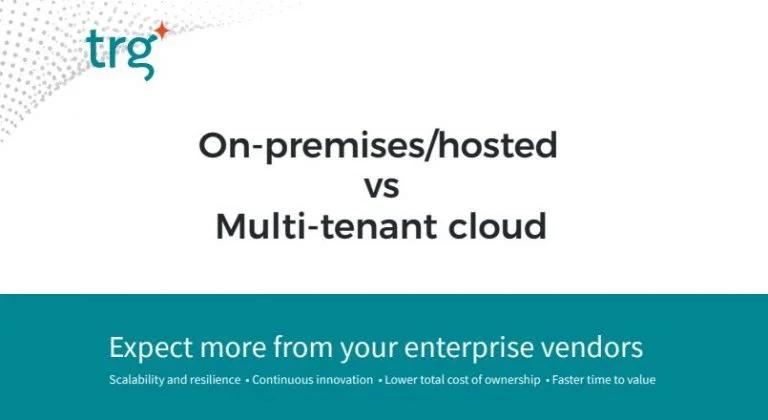
Multi-tenant cloud solutions provide elastic architecture, which automatically scales resources based on demand. According to the infographic from SunSystems, cloud infrastructure uses auto-scaling to handle varying workloads, leading to higher efficiency and lower costs compared to on-premises solutions. - Continuous Innovation
One of the biggest benefits of the multi-tenant cloud is automated product updates. With regular updates, businesses can access new features without downtime, unlike on-premises systems that require resource-intensive upgrades. This means you can stay ahead with the latest technology and functionality with minimal effort. - Lower Total Cost of Ownership
On-premises solutions often require significant investments in hardware, security, and maintenance. With a multi-tenant cloud, the costs are shared across users, resulting in reduced operational and hardware costs. Cloud providers also handle security updates, saving your IT team valuable time and resources. - Faster Time to Value
Multi-tenant cloud systems are quicker to implement and deploy compared to on-premises solutions. Automated provisioning means you can have your applications up and running in no time. The built-in resilience and high-availability zones reduce unplanned downtime, directly improving business productivity.
SunSystems Multi tenant Cloud vs. On premises/hosted solutions: Key Differences
1. Scalability
- On-premises/hosted: Manual configuration of hardware and resources is required, often leading to over-provisioning or underperformance during peak times.
- Multi-tenant cloud: Features like auto-scaling allow your system to dynamically adjust resources based on workload, making it a more cost-efficient and flexible solution.
2. Innovation and Upgrades
- On-premises/hosted: Upgrades are time-consuming and often delayed, which may cause you to lag behind in terms of new features.
- Multi tenant cloud: Automatic updates ensure you’re always using the latest version of the software without the need for manual intervention.
3. Cost of Ownership
- On-premises/hosted: Hardware and security costs are higher since businesses need to maintain their infrastructure. Static sizing of hardware also leads to inefficient use of resources.
- Multi tenant cloud: Cloud systems offer a lower total cost of ownership by sharing resources, significantly reducing hardware, security, and operational expenses.
4. Security and Compliance
- On-premises/hosted: Security measures must be manually handled by the company, often requiring additional resources and time.
- Multi tenant cloud: Leading cloud providers adhere to strict security standards like ISO 27001 and NIST 800-53, with built-in encryption and vulnerability testing ensuring the highest level of protection.
SunSystems multi tenant cloud vs On premises solutions. Which one is the Future?
The multi tenant cloud offers unparalleled advantages for businesses looking to scale rapidly, stay current with innovation, and reduce operating costs. Cloud based financial management systems like SunSystems provide prepackaged content for easy integration with other applications, business analytics, and AI-driven solutions, giving businesses a competitive edge in today’s fast-paced market.
Ready to Migrate to the Cloud?
Whether you’re considering cloud solutions for the first time or are ready to switch from on-premises infrastructure, SunSystems is here to help you make the transition seamless. Learn more about how multi tenant cloud systems can benefit your organization by downloading our free cloud migration guide.
Conclusion
When comparing on-premises/hosted vs. SunSystems multi tenant cloud, it’s clear that the latter offers more flexibility, better cost management, and a faster return on investment. The choice depends on your business’s specific needs, but for most modern organizations, moving to a multi-tenant cloud solution is the smart decision for long-term success.