


Managing real estate is not about maintaining buildings or collecting rent! It also involves optimising financial management processes to diversify investment portfolios and maximise returns. Nevertheless, navigating the financial landscape of this sector is often complex.
From residential to commercial and industrial properties, each type of real estate presents unique challenges and opportunities that shape financial processes.
Read more:Future of Financial Consolidation: Faster, Clearer, Connected
In this resource page, we cover…
Industry complexity: The real estate sector faces unique financial challenges due to its nature of being a high-cost industry, characterised by significant upfront costs, recurring expenses, and limited liquidity.
Need for optimisation: Effective financial management is essential to maximise returns and diversify investment portfolios. This involves both operational improvements (renovations and maintenance) and strategic financial activities like accurate forecasting, budgeting, and risk calculation.
Integrated technology renefits: Adopting an integrated approach provides enhanced visibility into expenses, automates manual tasks like data entry, and allows for proactive risk management through scenario modeling.
Market trends: There is a strong global shift toward cloud-based solutions, which offer scalability, remote accessibility, and integration with innovative technologies like analytics, data lakes, AI, and more. The Asia-Pacific region is projected to experience the fastest growth in this market.
Essential software features: Real estate businesses should prioritise solutions that offer integrated accounting, real-time cash flow management, seamless localisation for regulatory compliance, and centralised data storage to eliminate silos.
TRG International solutions: TRG provides a suite of modular, cloud-based platforms (such as Infor SunSystems and Infor EPM) designed to reduce finance operations costs by 40–50% and automate workflows like invoicing and contract management.
Understanding the real estate industry
Before we get to know the unique financial landscape that real estate businesses face, we need to understand the nature of this dynamic sector. The real estate industry can be divided into three major categories:

Residential
Areas designated for people to live. They include houses, apartments, and other types of dwellings. The focus is on providing safe, comfortable, and accessible living spaces, often with nearby amenities like schools, parks, and shops.
Commercial (tenant leasing)
Zones that are intended for business activities such as offices, retail stores, restaurants, and service providers. Tenant leasing in these areas involves renting space to businesses that operate within the property, typically managed by landlords or property developers.
Industrial zones
- New sites: Newly developed areas designated for industrial use, designed to attract investment and support modern manufacturing, logistics, and technology operations. These zones often feature updated infrastructure, flexible land use planning, and improved access to utilities and transportation networks.
- Existing sites: Established industrial areas that already host operating facilities and factories. These zones may focus on maintenance, upgrading infrastructure, and optimising land use to support expansion, modernisation, and continued business operations.
As a result, the tech stack for each business type tends to be unique and, not to mention, complex to meet the needs and demands of each real estate category.
Read moe:Fundamentals of Cloud | Public v Private, SaaS v Hosted, Multitenancy
What is real estate financial management?
In real estate, finance is the bridge that connects individuals (potential buyers) with property investors.
The financial activities in this sector are dynamic and complex, covering a wide variety from loans and mortgages to asset management, investments, acquisitions, and more. Plus, it is a highly costly sector that frequently faces high upfront costs, recurring expenses, and limited liquidity.
Where do real estate organisations get their finances?
Businesses in this industry have multiple financing sources, from traditional institutions like banks and credit unions to more modern (sometimes niche) lenders, such as private lenders, investment trust funds, and crowdfunding platforms that connect properties/projects with potential investors.
Read more:Tech Tidbits: What Is Open Banking? A Simple Guide to Your Financial Future
Why do real estate businesses need to optimise their financial processes?
Real estate is not about selecting a plot of land, erecting a building, and leasing it out. Businesses wanting to maximise their returns and optimise their real estate portfolios, in addition to nailing strategic location selection, need to develop an effective financial management process.
A lot is going on behind the scenes, which we can categorise into two aspects:
Operations:
Beyond collecting rent, real estate businesses also need to allocate funds to various improvement projects. For instance:
- Conducting targeted renovations for communal spaces (e.g., repainting or building a new playground, pool, spas, fitness centres, pet-friendly areas, etc.) to attract potential tenants
- Modernising and incorporating eco-friendly fixtures/ policies to boost the property value
- Enhancing the building security with the latest technology and best practices to safeguard its tenants
- Maintaining HVAC, firefighting, water supply, wastewater treatment, drainage systems, etc.
Financial:
A well-kept apartment building or a retail establishment is hardly the work of a single team of volunteers. It requires dedicated, multiple budgets that are regularly reviewed, aligned with the overall goals, and timely adapted to market changes.
The property is well kept because improvement projects are planned in advance, budgets and investments are forecasted and allocated, and risks are properly calculated and accounted for.
Accurate and efficient forecasting, combined with budgeting, forms the basis of a sustainable investment portfolio.
What are the benefits of an integrated financial management process?
Taking everything into account, having a strong financial management process, powered by an integrated technology ecosystem, can provide both finance and business leaders with:
- Enhanced visibility into expenses, profits, performance, as well as opportunities for cost optimisation and how all factors align with the company’s financial strategies
- A careful and thorough analysis of promising properties (e.g., location, market trends, condition, etc.), therefore, leaders can make more informed investing/ acquiring decisions
- Insights into short/ long-term liquidity needs and goals to navigate the uncertain economic conditions ahead
- Automated processes to eliminate manual tasks like data entry or debt tracking, ensuring the company can meet its financial obligations, increase productivity, and ensure reporting accuracy, among other things
- Optimised resource allocation by prioritising projects that offer the best possible returns
- Maximised existing asset and property value through strategic renovations, thus contributing to the company’s bottom line
- Proactive risk management to protect the company and its investors from market fluctuations and unpredictabilities through diversified and calculated investments
As property values move with the market, reliable accounting becomes businesses’ steady compass, providing a clear, up-to-date view of what each asset is really worth. With this transparency, it is easier to explore refinancing opportunities and attract investors who are seeking dependable, well-managed investments.
Did you know? Radisson Blu Hotel Ha Long (Vietnam) was able to slash 90% of the usual manual work just by transforming their financial processes. How did they do it? Read the complete story here!

A look into the real estate financial management software market
Businesses are witnessing a strong shift towards cloud-based solutions due to their advantages of being:
- Flexible and scalable upon demand
- Subscription-based, only pay for what you use
- Accessible to emerging techs like AI, machine learning, big data analytics, automation, etc.
- Integratable with other solutions, platforms, such as CRM, ERP, asset management, marketing, etc.
- Convenient while working remotely or on-the-go
As the real estate industry becomes more data‑driven and customer-focused, financial management solutions dedicated to this sector will continue to play a vital role in boosting operational efficiency, supporting confident decision‑making, and providing clear portfolio visibility.
According to NetSuite, the market for real estate accounting/ financial management software is expected to grow 114% by 2030. [1]
The number is also positively looking, $12.5 billion globally with a healthy CAGR of 8.7% from 2025 to 2033, according to Strategic Revenue Insights. [2]
Asia-Pacific is projected to have the fastest CAGR (8.21% from 2026 to 2033). The growth is mainly driven by “rapid urbanisation, expanding construction activity, and increasing adoption of cloud-based real estate platforms across China, Japan, India, South Korea, and Southeast Asia.” [3]
Other notable highlights of this market include [2]:
- More than 60% of new deployments expected to be cloud-based by 2033.
- Strong integration with other real estate management systems is becoming one of the key added values.
- Regulatory compliance and data security remain top priorities, prompting organisations to look for accounting solutions that are both robust and highly secure.
- AI and machine learning are increasingly being used to deliver predictive analytics and automate routine accounting tasks, enabling teams to work more efficiently while improving the overall user experience.
- The Asia–Pacific region is set for the fastest expansion, with a projected growth rate of 10.5%, as emerging economies continue to invest in digital transformation and real estate development.
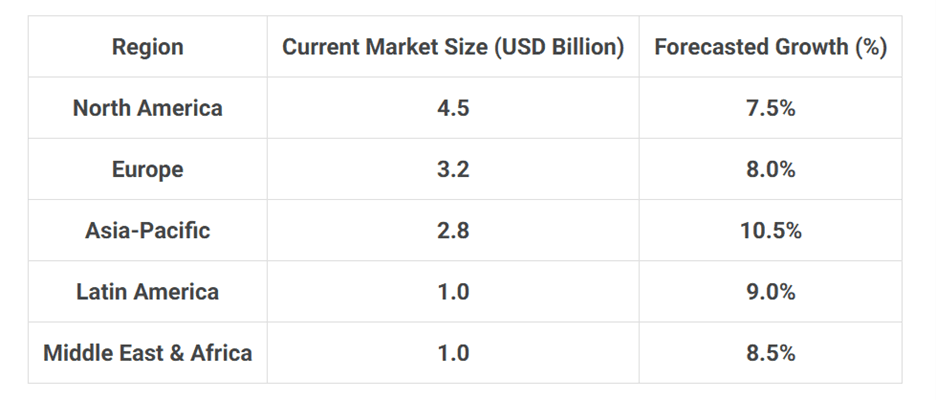
Source: Strategic Revenue Insights [2]
The rapid cloud adoption is due to the increased awareness in cloud advancements coupled with tighter regulatory requirements on ESG reporting, anti-money laundering and other compliance risks, the need for leveraging the latest technologies (think Generative AI but also open banking, self-service analytics, data lakes, etc.) to accelerate manual, spreadsheet-based workflows, and the rise of remote working.
Cloud software, in general, has been positioned as an agile solution to fluctuating business demands (scaling up or down resources when necessary) and costly customisations (replacing them with API-first platforms). The variety of deployment methods alone can explain why these solutions are no longer nice-to-have but necessary for businesses looking to digitally transform their operations.
Read more: 4 Blueprints for Your Enterprise’s Cloud Strategy

Roadblocks that real estate businesses are looking to eliminate with modern financial management solutions
Residential properties
Residential developers, owners, and property managers often struggle with fragmented financial data across projects, properties, and entities. The fragmentation leads to a series of clerical challenges that eventually tie up cash flow:
| Challenges | What the businesses expect to achieve |
|
|
Commercial properties
In commercial portfolios, finance teams must manage complex lease structures, multi-currency contracts, and long-term capital projects. Legacy systems are rarely integrated with leasing, facilities, and asset management tools, creating data silos and duplicate entry.
| Challenges | What the businesses expect to achieve |
|
|
Industrial properties
Industrial real estate businesses deal with large-scale properties, assets, and subsequently, cost structures and operational models. Finance teams struggle with high transaction volumes, multi-entity consolidation, and granular cost allocation to assets and projects regularly, making investment evaluation highly complex and downright taxing.
| Challenges | What the businesses expect to achieve |
New sites:
|
|
Existing sites:
|
|
Read more:What You Need to Know about Data Fabric and Do You Need One?
What should real estate businesses look for in a financial management solution?
With our 30+ years of experience in IT consulting and implementation, we suggest that real estate businesses consider the following nice-to-have to must-have functions and features when evaluating or shopping for financial management solutions.
Integrated accounting tools (must have)
Still relying on manual processes is one of the most common efficiency roadblocks that many modern businesses face today. It not only slows down operations but is also costly to maintain. Optimising financing structures certainly ensures that capital is timely allocated to where it generates the highest returns, thus enhancing tenant satisfaction and retention, supporting ESG and regulatory requirements, and extending asset longevity.
Read more:Scaling Your Business With Sunsystems Cloud
Leveraging capital for property acquisitions, developments, or major refurbishments should always be informed by rigorous analysis of current and projected debt levels, covenant requirements, and refinancing risks to safeguard long-term financial health and maintain access to credit markets.
Let’s also not forget about multi-currency capabilities. When businesses operate across the globe, an accounting system with this built-in feature will facilitate smoother reporting across borders.
With robust features, real estate businesses can compare scenarios and present clearer, data‑driven investment cases to boards, lenders, and investors.

Cash flow management (must have)
Cash flow management involves closely monitoring the timing and predictability of inflows and outflows so that the business can meet its obligations without disruption.
An effective cash flow means rental income consistently covers operating expenses, debt service payments, and property maintenance costs, which is essential for avoiding cash shortfalls, protecting lender relationships, and maintaining asset quality.
When cash flow is planned and tracked in real time across properties and entities, investors can proactively manage their portfolios and reinvest surplus cash with confidence, rather than reacting to unexpected gaps that erode returns and increase risk.
Compliance (must have)
With properties spanning across different regions, each has its own unique geopolitical conditions, it is a no-brainer that the financial management solution of choice needs to be seamlessly localised while also adapting and updating in a timely manner with every regulatory change.
For instance, the in-depth knowledge of accounting standards of TRG consultants combined with the flexibility of Infor SunSystems has resulted in the development of VAS 99 support service as the direct response to Vietnam’s latest release of Circular 99. The support service ensures our customers’ financial data, as well as reports, stay accurate and compliant with the least amount of disruptions possible.
Budgeting, planning, forecasting, and reporting (must have)
We can’t stress enough how critical robust budgeting, planning, forecasting, and reporting features are in today’s volatile economy.
Developing comprehensive, driver-based budgets is foundational for accurately forecasting income, service charges, and capital expenses across assets, projects, and special purpose vehicles (SPVs).
With integrated EPM tools, real estate businesses can model different occupancy and yield scenarios, assess the impact of refinancing or redevelopment, and reforecast quickly as market conditions change.
This level of control and agility not only strengthens governance and cash flow management but also supports better investment decisions and more transparent communication with investors, lenders, and regulators.
Read more:Don’t Buy EPM Software Until You Read This Guide!

Centralised data (must have)
We are wasting up to 30% of our daily time searching for information hidden in piles of paperwork, endless Excel rows, deep in the email inbox, or kept in another department entirely [4]. If we are not looking for stuff, we are attending some meetings [5]. Our time is limited, and unless you want the work to spill over to your valuable personal time in the evening or during the weekend, some processes need to be automated, and data must be centralised.
Centralised data lets teams store leases, tenant details, financials, building records, etc. in one place, enabling them to find answers faster and collaborate better.
Read more:Where to Automate? Identifying Key Opportunities for Business Efficiency
Risk management (must have)
Shifts in interest rates, changes in local demand, regulatory updates, and broader economic cycles can rapidly alter asset values and rental yields. These risks can disrupt cash flow, while unplanned repairs, compliance upgrades, or employee turnovers can erode returns.
Modern, integrated financial management platforms can provide real estate businesses with scenario modelling to test-run a series of “what if” cases and their impacts. This includes:
- Stress-testing cash flow under different occupancy and pricing scenarios
- Maintaining adequate reserves
- Diversifying across asset types and locations
- Or implementing preventative maintenance programs to extend asset life and reduce downtime
Moreover, finance teams today can take a more proactive role in analysing and running forecasts without relying on IT teams. This is possible due to the self-service capability in today’s advanced solution.
Other should-haves or essential enhancements in a financial management system for real estate include:
- Certificate and license management for security
- Robust data security measures
- Reporting for government and public entities, especially for listed companies (e.g., an ESG reporting pack is a desirable advantage now)
- Contract automation via localised workflows
- Automated cost allocation to units or tenants for accurate P&L
- Integration between finance systems, banks, P2P platforms, and other solutions
Additional features that may not be of a high priority but are also nice to have is AI-powered predictive maintenance for optimising asset management, thus empowering real estate businesses to make the most out of their equipment.
Read more:Nucleus Reports Infor EPM Improves Financial Productivity by 20 Per Cent
Transform your finances with TRG International
TRG supports your real estate organisations in modernising financial foundations with innovative, modular cloud-based platforms that integrate seamlessly with legacy systems.
Combined with local expertise, you can achieve faster deployments (5–8 weeks) and measurable outcomes, specifically:
- Reduce finance ops cost by 40–50% and gain real-time cash positions
- All-in-one subscription package, 50–80% less custom code
- Highly secure and audit-ready
- Preventive maintenance and mobile approvals to cut downtime and cycle time
- Automated invoicing and reminders to significantly save time
Our solutions replace fragmented, legacy finance tools to bring you real-time visibility and strengthened controls:
| Name of solution | Role in real estate | Key use cases | Key integration benefits |
| Infor SunSystems | Cloud-based financial and performance management system for real estate operations | Global and local regulatory-compliant accounting Property-level reporting Portfolio performance analysis | Centralised financial visibility across multiple properties and business units |
| Sysynkt | E-banking, procurement and process automation for real estate services | Expense management Budget vs. actual cost monitoring Document automation | Seamless integration with SunSystems, enhance operational efficiency and links finance with facility and project teams |
| Asset Management | Asset management solution for real estate | Lease management Asset performance tracking Maintenance scheduling | Improved strategic decision-making and resource allocation |
| UniFi | Contract management system tailored for real estate sector | Contract lifecycle management Compliance tracking Renewal management | Centralised storage and retrieval of contracts, lowering legal risks |
| CS Lucas | Cash flow management Fund and loan management | Cash flow forecasting for all project phases Insights into loans and loss amounts | Ensure liquidity and planning accuracy
|
| TRG Academy | On-demand user training platforms | Streamline new team members’ onboarding and training Upskill existing members | Leverage the platform to streamline employee training and development, preventing knowledge loss |
By combining deep financial management expertise with secure, cloud-native technology, TRG enables real estate finance and IT leaders to move beyond basic accounting and gain the insight, control, and agility required to grow and protect their portfolios.
Seeing is believing! Witness TRG’s robust financial management solutions in action by simply scheduling a quick call with our experts today!

Referencces:
1. https://www.netsuite.com/portal/resource/articles/accounting/real-estate-accounting.shtml
2. https://www.strategicrevenueinsights.com/industry/real-estate-accounting-software-market
3. https://www.databridgemarketresearch.com/reports/global-real-estate-software-market
4. https://docflow.co.uk/time-wasted-looking-for-files/
5. https://www.microsoft.com/en-us/worklab/work-trend-index/breaking-down-infinite-workday