

If you are starting to see a handful of young, new employees here and there in your company who all have the “eager to learn new things” look on their faces and a smartphone in their hands, lucky you for spotting the first crop of Generation Z (those who were born from 1996 onwards).
In case you have lost track of time, the oldest Millennials are well in their 30s now. Some of them have reached the managing positions for quite a while and soon they will start overseeing Gen Z. Thus, they need to be prepared in order to manage them right.
Read more: Decoding Gen Z: What does MBTI say about Gen Z?
Generation Z is not the same as Millennials
There are misconceptions about the similarities between these two dynamic cohorts, Generation Z and Millennials. They are both tech-savvy, creative, and highly ambitious. But aside from that, Gen Z has distinct characteristics that may make them better employees than Millennials.
If some of your team members are Gen Z, watch out for the following mistakes.
Mistake 1: Assume Gen Z is the same as the Millennials
Gen Z grew up during the Great Recession. As such, their outlook on life and on work is very different. They are more realistic and more independent in their outlook on the future. Being born amidst the internet boom and the smartphone era, they are also true digital natives.
According to David Stillman (co-author of “Gen Z @ Work: How the Next Generation Is Transforming the Workplace”): “Millennials were all about finding meaning in their jobs, and how best to make the world a better place. With Gen Z coming of age during the recession, they are putting money and job security at the top of the list… Surviving and thriving are more important.”
Read more: Gen Z’s Expectations for Leadership Are Reshaping Modern Workplaces
On the one hand, we have the Millennials who want to pitch their ideas and have a team-oriented mentality. On the other hand, Gen Z is competitive, entrepreneurial, and wants to be judged on their own merits.
Recent studies have proven that these two cohorts are, in fact, drastically different. Assuming they are, and offering the same training and development methods to both would demotivate both groups.
Mistake 2: Assume Gen Z is “a chronic job-hopper 2.0”
Jonah Stillman (co-author of “Gen Z @ Work: How the Next Generation Is Transforming the Workplace” and a true Gen Z) disagrees with this statement entirely. He believes that Gen Z, after witnessing their parents and grandparents struggle financially, would stay with a company for 10 years or more if they are given opportunities to advance and a desirable working environment.
Stillman also commented that 75% of Gen Z prefers to obtain as much valuable experience by trying out various roles and projects within the same organisation.
Gen Z expects their managers to provide multiple career paths, or at least, create a working environment that exposes them to as many roles as possible.
Having said that, these youngsters do not consider higher education as the only path to success. They do not want to live a stressful life paying off debts just like their parents. They will pursue just-in-time learning solutions or will seek for development training on-the-job as alternatives to attending college.
If Millennials strive for freedom at work, Gen Z takes it a step further, blurring the physical and digital worlds ever more. To Gen Z, work can be done anytime, anywhere as long as they are evaluated based on their performance, instead of the time spent at the office.
Read more: Gen Z and Gen AI: The New Digital Mentorship Revolution
How to become an ideal employer in the eye of Gen Z?
Gen Z is infamously known as “the eight-second generation” for their limited attention spans, constantly checking their Facebook, Snapchat, or Twitter – a great distraction to even Millennials.
This comes naturally as Gen Z grows up with unlimited access to an endless stream of information. They can filter news very quickly. Only the most worthy can attract their attention.
On the bright side, due to being highly technologically savvy, they will likely lead other generations in digital transformation projects, which will typically change the dynamic as well as the hierarchy of the business.
Organisations that will win the recruitment and retention games are those that value Gen Z’s individuality and embrace their distinct characteristics.
Read more: How Companies Can Blend Tech and Touch in Mentorship for Gen Z and Beyond
1. Embrace new technologies
Gen Z is an “always on” generation, which means they want a constant connection. As a result, companies are more willing to develop their own mobile apps, along with other applications, to accommodate Gen Z’s need to stay connected on the go. Emerging technologies like wearables, robotics, and virtual reality will also become more common in the workplace, all thanks to the impact of Generation Z.
2. Develop a new mode of communication
Many would assume that Gen Z’s preferred mode of communication is texting or via other social media platforms. Stillman comments that as many as 84 per cent still want to talk face-to-face. Interactions during social events, strategy sessions, project updates, informal meetings, etc., will still be conducted in person.
Millennials have pioneered the development of digital communication tools for internal teams that are more streamlined, efficient, and effective. Generation Z will strike a balance between online and offline worlds.
Read more: Which Leadership’s Key Factor is Unintentionally Forgotten?
A holistic, interactive multi-channel approach includes emails, videos, and face-to-face should be considered as a new mode of communication to suit the needs of this generation’s particularly short attention span.
3. Come up with a new leading style
As mentioned above, Gen Z is not a collaborative type like Millennials. They prefer to have their own space and work at their own pace. Managers should encourage Gen Z to unleash their creativity and competitiveness with opportunities that allow them to take ownership of a project or initiative which they can implement from start to finish.
Also noted that this generation wants to be evaluated based solely on their performance, not for how long they have been with the company. As they are eager to learn and favouring job stability, as long as they see their future at your company, it’s unlikely that they will jump ship.
4. Give them real perks
Be real and personal with Gen Z to understand their true motivation for working for your company. Growing up amidst the financial crisis has moulded them to take financial security very seriously.
However, not all of them want the same piece of cake. Some of them may want to work from home. Others may want to pursue a passion. Generous compensation and benefits for Gen Z will be key to keeping them engaged and, ultimately, motivating them to reach their full potential.
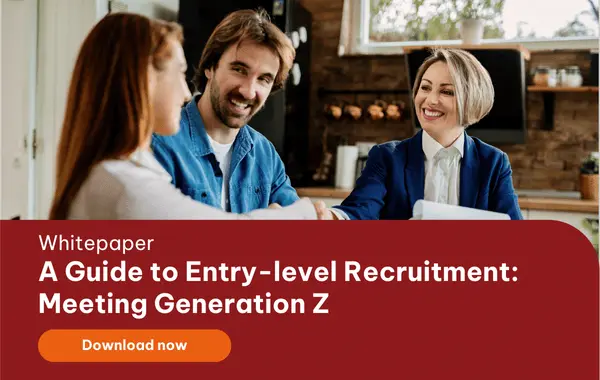
To manage and lead Gen Z, you first need to recruit them. But how can you do so efficiently? Download our whitepaper below to learn more about this diverse and ambitious generation, as well as what they look for when seeking jobs!