
No sooner had US software publishers begun venturing into international markets in the early 1980s than the need for software localisation arose. Microsoft, for example, opened its office in Japan in 1978 and expanded its business into Europe in 1979.
Unsurprisingly, the significance of localisation at that time was not fully appreciated. When Microsoft introduced Multiplan (predecessor of Excel) to the Japanese market, they asked their distributor to localise the software into Japanese.
According to a Microsoft executive, all they did was to “…turn over the source code library to the folks in Japan, wish them luck and go on vacation.”1 As it turns out, localisation has become indispensable for any software publisher’s commercial success. Sometimes, however, it is the distributor’s initiative that makes localisation possible, as in the case of Infor SunSystems in the Vietnamese market.
Read more:Exploring Financial Management Solutions: An Overview of 6 Leading Software
What is software localisation?
Localisation is the process of adapting software to a specific target market (locale) to meet its linguistic, cultural, and business requirements.
To some common users, localisation may seem simple: translating the user interface and documentation. In reality, this process is significantly more complex and demanding.
A user in China would be very different from a user in the United States, not only because of the languages they use but also because of differences in culture, customs, and business practices.
Localisers, therefore, have to adapt their software to meet local users’ expectations in both functional content, such as time formats, measurements and cultural content, such as styles, icons, images, colours, etc.
Software localisation is critical. Yes, having a localised version of the solution can make the user experience much more intuitive and, in turn, increase adoption. Different languages should not be a barrier to businesses and their users leveraging innovative and transformative solutions.
User adoption aside, localisation can help a software provider build trust and open more doors to new markets that would otherwise be untouchable, as people engage more with content and design they are familiar with.
Case study:Radisson Blu’s Journey to Financial Efficiency, Team Now Spends 90% Less Time on Manual Work
Compounding the issue is the fact that, unlike consumer applications, enterprise applications often operate in a highly regulated context with numerous laws, standards and customs to adhere to.

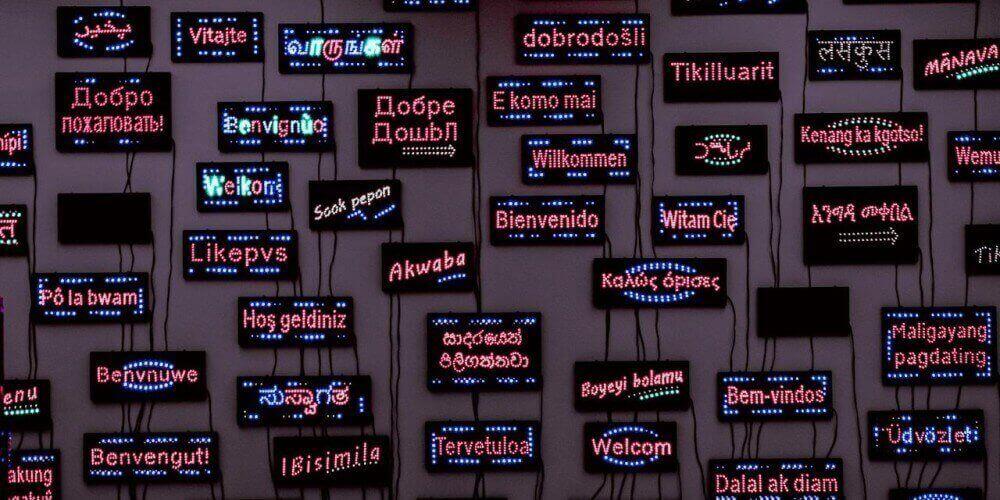
Software translation versus software localisation. Image source: xtm.ai
Financial management software, in particular, needs to comply with the specific accounting standards and regulations of each country. Consequently, software publishers often outsource this tedious undertaking to external service providers or rely on their local partners for more effective localisation.
After all, who could possibly be more adept at understanding the locale? For instance, Infor partnered with Hitpoint Solution, a Shanghai-based financial management consulting firm, to deliver the localised SunSystems pack to the Chinese market.
Fun fact: There is actually an entire market dedicated to software localisation, and it is currently valued at USD 4.9 billion. The market’s estimated CAGR between 2025 and 2034 is expected to be around 12.4% .
Localising Infor SunSystems for the Vietnam market
Infor SunSystems is a leading financial management solution used by over 9,000 organisations in nearly 200 different countries and territories. To provide power and flexibility to both global corporations and local businesses, multilingual and multicurrency capabilities are an absolute necessity.
As such, in addition to English, the solution fully supports most widely used languages worldwide, including French, Spanish (International), Japanese, Portuguese, Thai, and both simplified and traditional Chinese.
Among the newly added languages is Vietnamese, which means that from now on, companies operating in Vietnam can buy localised SunSystems directly from Infor or any of Infor’s authorised partners.

A little-known fact, however, is that the Vietnamese pack of SunSystems is the product of the passionate and relentless efforts from TRG, an Infor Gold Partner, as well as one of the longest SunSystems partners in the world (they’ve been a SunSystems partner since 1994), which started the process of localising SunSystems for the Vietnam market more than a decade ago for version 4.
Unlike typical localised solutions, this project was initiated not by the publisher, Infor, but by TRG’s desire to provide Vietnam’s companies with a prestigious international solution that is able to comply with local requirements, most notably the Ministry of Finance’s VAS, or Vietnamese Accounting System.
An international solution providing world-class capabilities along with local legal and regulatory compliance is exactly what many clients of TRG need. “Our accountants find SunSystems satisfactory and pleasant to work with.
It is easy to use and compatible with Vietnamese accounting standards,” said Nguyen Huu Minh, CFO of Auto Grill VFS F&B. VAS compliance, however, is not an out-of-the-box feature of any international software solution (including the largest ERP vendors in the world) or for SunSystems, but it is via an additional module developed solely by TRG.
One particular aspect of financial management is the need to deal with constantly changing regulations. As a result, localisation for solutions such as SunSystems is an ongoing endeavour. Most recently, TRG has fully adapted SunSystems to VAS’ latest regulations, i.e. Circular 200 and other circulars for specific industries such as Circular 199 for insurance companies or Circular 107 for the oil & gas industry.
TRG’s VAS adaption for SunSystems covers the full spectrum of compliance requirements dictated by the Vietnamese government, including predefined charts of accounts and analysis codes, an array of 16 required financial and tax reports, business forms and related documents. TRG’s clients can make changes to meet new requirements themselves with little difficulty, or they can request assistance from TRG to complete the transformation within days.
The dedicated effort of TRG to localise SunSystems over the years has been driven primarily by the quest for improved customer satisfaction, culminating in the addition of this Vietnamese package as a standard in SunSystems 6.
The benefit of this work, however, can be felt beyond the Vietnam market. TRG’s translation kit, developed to localise SunSystems version 4, also helped create several other localised packs for Thai, Korean, Farsi and Azeri languages.
To find out more about the latest TRG’s Infor Sunsystem VAS Edition, check out our on-demand webinar where we explore the latest VAS Circular 99 and how Infor SunSystems can help businesses stress less on compliance problems.