

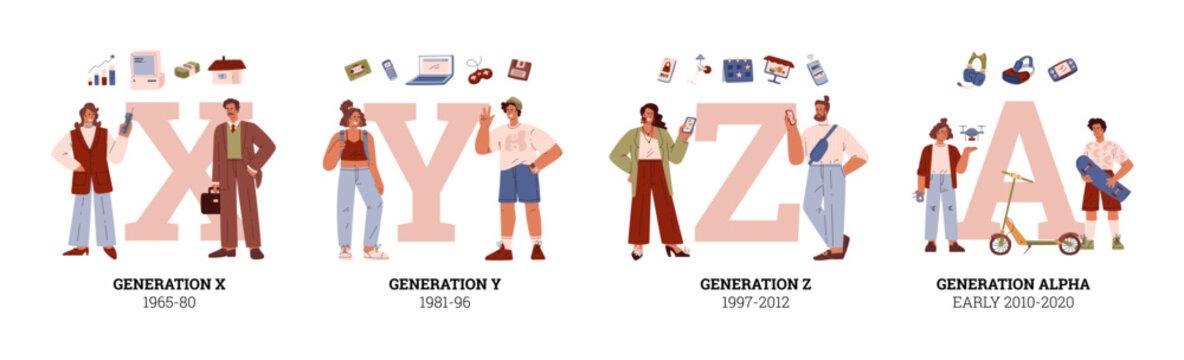
Generation Alpha comprises individuals who were born between 2010 and 2025 while experiencing first-hand the digital era that includes artificial intelligence, along with voice technology and immersive media platforms. Their fundamental expectations toward technology, education, and brands differ substantially from their counterparts.
As a consequence, businesses face a dual situation of difficulty and possibility. Organisations that recognise and adapt to customer behaviours by offering interactive experiences and gamified content with value-based approaches will achieve better loyalty acquisition success.
This article shows the distinctions between Gen Alpha and Gen Z generations and their impact on business approaches and operational functions while explaining why early preparation for this demographic will ensure sustained growth and organisational relevance throughout the future.
Read more:Is a Multi-generational Workforce an Advantage or a Threat?
Understanding Gen Alpha
Generation Alpha (or Gen Alpha) is a new generation which is beginning to take shape, and businesses can no longer afford to ignore them. They are typically defined as those born between 2010 and 2025, the first cohort to be born entirely in the 21st century. From smart speakers to artificial intelligence (AI), from interactive gaming platforms to algorithm-driven social feeds, these children are immersed in a level of connectivity that no previous generation has experienced [1].
For comparison, Generation Z – born roughly between 1997 and 2012 – were digital pioneers. They observed smartphones emerge, social media explode, and the world transition toward mobile-based digital living.
Read more:Decoding Gen Z: What does MBTI say about Gen Z?
Gen Alpha exists in a reality which has always included on-demand streaming services as well as personalised algorithmic recommendations and AI-driven content suggestions [2]. The difference matters because technology expectations, brand perceptions, and educational demands develop naturally from birth instead of being acquired through time.
Businesses face an urgent question: Does Gen Alpha follow the path of Gen Z, or do they require new approaches because they represent a distinct generational group?
Read more:Gen Z’s Expectations for Leadership Are Reshaping Modern Workplaces
Gen Z vs Gen Alpha: What sets them apart?
Technology environment
Technological developments have transformed how different generations solve problems in their lives, especially in business operations.
Gen Z emerged as digital innovators during their upbringing. They witnessed smartphones and social media platforms Facebook and Instagram become prevalent as they navigated through the digital revolution.
Read more:Gen Z and Gen AI: The New Digital Mentorship Revolution
Gen Alpha are AI natives. At a young age, they interact with Alexa, Siri, and ChatGPT while engaging in Roblox and Minecraft [4] gaming platforms. The everyday tools of their world include AI and immersive media beyond being mere innovations.
Media habits and cultural shaping
The speed of platform adoption varies between generations because of their different media consumption patterns. The transition from television to YouTube and TikTok occurred during Gen Z’s youth. They use these social media platforms as their primary sources of entertainment and education.
Read more:Social Media Recruiting: The New Era of Attracting Top Talent
On the other hand, Gen Alpha grew up with content that features shortened formats combined with game elements and interactive experiences. Their media experiences direct the way they concentrate on tasks as well as the methods they use to acquire information and advertising responses.
Values and worldview
People develop their values by responding to worldwide developments. Gen Z members experienced climate change activism and economic instability alongside social justice movements, which led them to become practical but outspoken supporters of equity. Our youngest generation, Gen Alpha, experiences their worldview formation through cutting-edge technology, worldwide connectivity, and greater sustainability education and media exposure.
Read more:Culture Fit vs Culture Add: Transforming Company Culture for Growth
Gen Z values diversity, inclusion, and authenticity. They expect brands to take a stand on social issues.
Gen Alpha may carry these values further, but with a tech-embedded lens: they are sustainability-conscious but also expect solutions to be seamlessly integrated into technology and lifestyle [3].
Consumer behaviour
These generations shape market trends through their financial capability. Gen Z has established itself as a fundamental market segment because they can make their own purchases today. Gen Alpha has established substantial control over family purchasing decisions despite their youth, which means they steer family selections for food and entertainment and technology products.
Gen Z holds $360 billion in worldwide spending power as they start their adult lives. Household spending receives direct influence from Gen Alpha, while their population will exceed Gen Z as a consumer group [5].
Education and learning style
Different learning approaches serve as evidence of the generation divide. Gen Z students faced a shift from conventional classrooms to virtual learning when the COVID-19 pandemic occurred. Gen Alpha experiences educational development through hybrid and digital-first learning systems, which include AI tutors and personalised education, together with gamification as standard features.
– Gen Z used tools like Google Classroom, Zoom, and online courses during their school years.
– Gen Alpha is growing up with AI-powered personalised learning platforms that adapt content in real time.
Read more:How Companies Can Blend Tech and Touch in Mentorship for Gen Z and Beyond
What does this mean for businesses?
Businesses face both opportunities and challenges as Gen Alpha arrives. Gen Alpha is predicted to accelerate the changes that Gen Z has already brought about in the consumer markets, marketing, and workplace. This generation will expect more individualised, immersive, and values-driven experiences due to their unparalleled exposure to technology, shorter attention spans, and increasing influence over household purchases.
Businesses that begin to adapt now will have the advantage of fostering enduring loyalty among the largest emerging consumer group in the world.
Product and service design
For Gen Alpha, products and services are expected to integrate seamlessly into both digital and physical spaces. They appreciate customisation, whether it be in learning resources, avatars, or product design.
This generation is also being exposed to sustainability concepts more and more through family values and educational institutions. They will anticipate and are likely to remain loyal to brands that provide socially and environmentally tailored options, such as ethical sourcing and digital-physical integration into their design processes.
Workforce and talent strategy
Gen Alpha’s career expectations will derive from digital-first educational platforms. This generation also appreciates workplaces that embed AI and automation into their standard operations while providing flexibility alongside continuous learning opportunities.
Businesses should allocate funds toward AI-based training systems and flexible organisational frameworks that support both independent work and collaborative team efforts to attract and retain this generation.
Corporate values and responsibility
Gen Alpha will view corporate responsibility as the norm rather than a differentiator. They are likely to favour businesses that exhibit quantifiable impact because they grew up in a time of climate change, global health crises, and increased social consciousness.
For this generation, sustainability and inclusivity will be fundamental standards rather than promotional messages. Because Gen Alpha will have the means to compare, fact-check, and hold brands accountable in real time, companies that don’t meet these standards run the risk of instant scepticism. Gaining their trust will require integrating sustainability, diversity, and transparency into all facets of business operations.
Generation Alpha represents the upcoming generation which will lead society through digital native behaviour, social awareness, and economic dominance. Although they remain in their youth stage, their power to transform markets along with household choices is evident, while their upcoming influence on employment sectors and worldwide economic systems will surpass everything that has come before.
Businesses must take action now by creating innovative products alongside authentic brand values because ignoring these steps will cause them to become obsolete during Gen Alpha’s reign to power.

REFERENCES
[1] https://www.axios.com/2024/01/01/gen-alpha-charactertistics-technology-school-climate
[2] https://www.gwi.com/blog/gen-z-vs-gen-alpha
[4] https://www.vox.com/life/458630/minecraft-roblox-gaming-kids-gen-alpha-culture-millennials
[5] https://www.businessinsider.com/gen-alpha-shoppers-buying-habits-samyang-ramen-owala-bottles-2025-2