

Environmental sustainability has surged to the forefront of many businesses, for instance, those in the FMCG (Fast Moving Consumer Goods) industry. Countless face the increased pressure from both the government and consumers about the impacts of their manufacturing processes. As a result, businesses need to commit to their Environment-Social-Governance (ESG) goals.
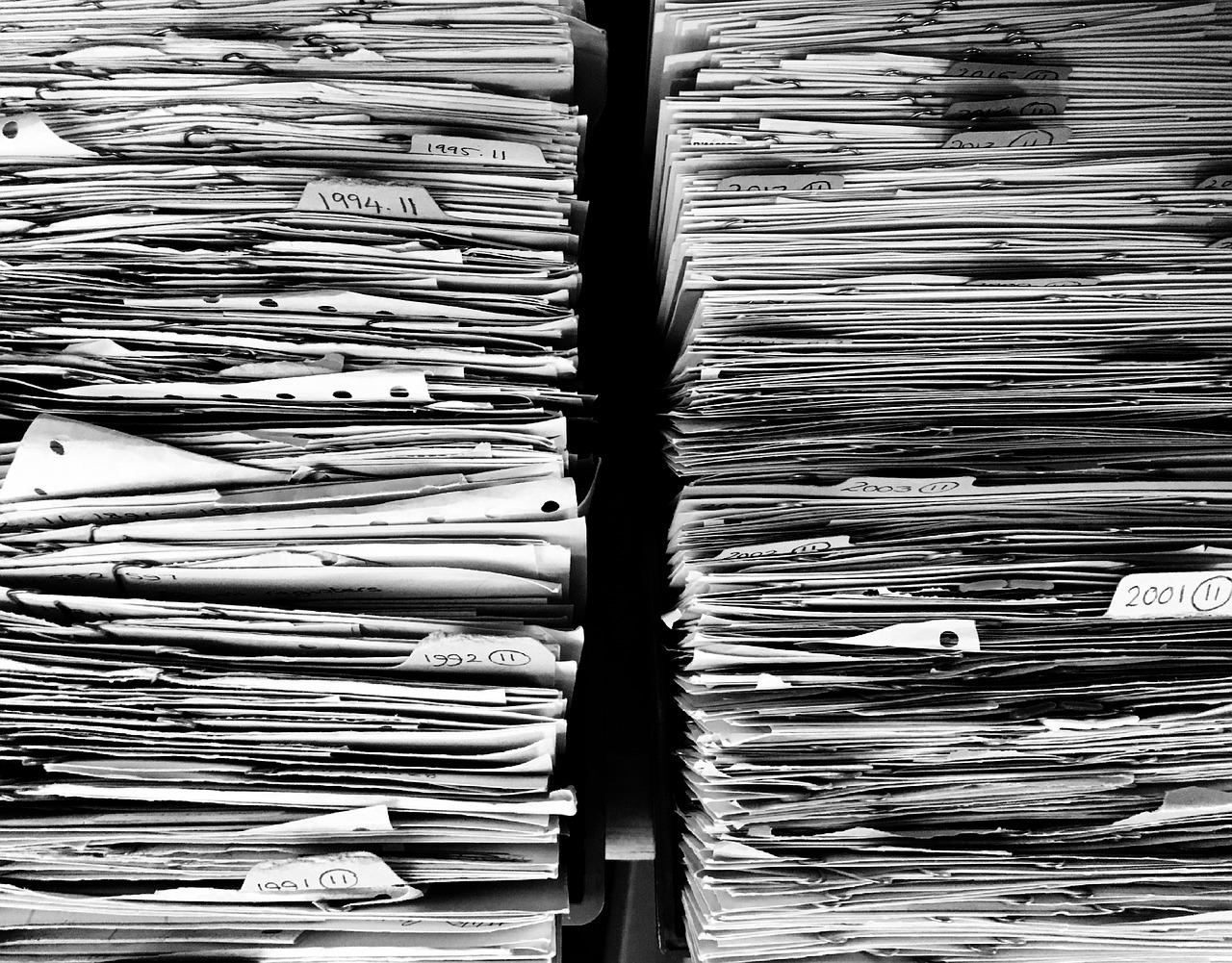
Many fresh ideas are brought to the table. However, there is one minor area that is often overlooked in the back office: the reliance on paper.
What is decarbonisation?
Decarbonisation refers to the reduction of carbon emissions associated with human activities. For organisations, they need to commit to reducing their carbon footprint. Strategies have emerged with joint hands from various departments: replacing single-use plastic cups with reusable tumblers or mugs, minimising food waste in the pantry, using energy-efficient office lighting, etc.
How about paper waste in the office?
Let’s consider these facts and statistics:1
- Office paper usage: The average office worker uses 10,000 sheets of paper2 annually.
- Recycling impact: Recycling one ton of paper saves 17 trees3 and 7,000 gallons of water.
- Cost of paper waste: UK businesses waste an estimated £120 million4 on unnecessary printing each year.
- The environmental impact of paper production
The pulp and paper industry is one of the most energy-intensive industries out there!
A study shows that the pulp and paper industry 5 ranks fourth in industrial energy use, accounting for 6% of global industrial energy consumption and 2% of direct industrial CO2 emissions.
Other research 6 states that, on average, producing one single ton of paper can release 1.5 tons of CO2 into the air! Depending on the type of paper, the exact amount of CO2 might vary, averaging around 942 kilograms and up to 1978 kg of CO2 for every metric ton.
According to the Food and Agriculture Organization (FAO)7, we lost a net forest area of 3.3 million hectares annually from 2010 to 2015. Pulp plantations played a large part in the deforestation. Since 2000, intact forest landscapes have declined by 7.2%, with timber harvesting (a portion is for papermaking) being a major contributor.
Looking at the numbers, transitioning to a paperless approach is not just a trend—it is a must to save our environment and fight against climate change. Businesses that cut back on paper use are taking seemingly tiny but significant impacts on how the world at large.
Read more:Sustainable Hospitality: Why Going Green Is Not That Straightforward
Why should businesses go paperless?
Societal expectations are increasing, and the triple bottom line—people, planet, and profit (3Ps)—becomes more important. Businesses face rising pressure to prove ethical standards and showcase their socially responsible commitment.
Campaigns are launched by many FMCG corps, such as using sustainable materials for longer lifecycle/environmental friendliness, collecting used bottles/pumps for reproduction, and changing packaging for detailed instruction that educates and raises awareness about reuse and recycling.
However, alongside the ever-growing demand for ‘greener’ products and processes, consumers and investors are more interested now than ever in companies’ initiatives towards responsible practices contributing to a greener planet, focusing on their internal team/back-office activities. Are they also making an effort to save resources?
Going paperless stands out as a simple yet effective solution. Considering where or how paper is used in the office then minimises the amount, businesses can significantly cut down on their carbon emissions related to producing and disposing of paper products.8
Transitioning to a paperless workplace offers several benefits:
- Mitigated environmental impact: By eliminating paper, companies can lower their overall carbon emissions based on their reduced consumption (as mentioned above, on average, we generate 942 kilograms of CO2 for every metric ton of paper).
- Enhanced productivity: Digitalised processes and streamlined workflows allow information to move faster and more efficiently while enabling staff to work from everywhere.
- Improved data security: Digital documents can be encrypted, backed up, and protected more effectively than paper records.
Read more:What Are CSR, ESG, and Sustainability & Why Do They Matter For Business?
Automate your entire purchase to payment process with Yooz
Our Yooz solution can be a key player in transforming your office into a seamless, paperless environment. Managing numerous invoices—including e-invoices—can sometimes feel overwhelming for any team. It can be even more stressful if your company has more than one entity.
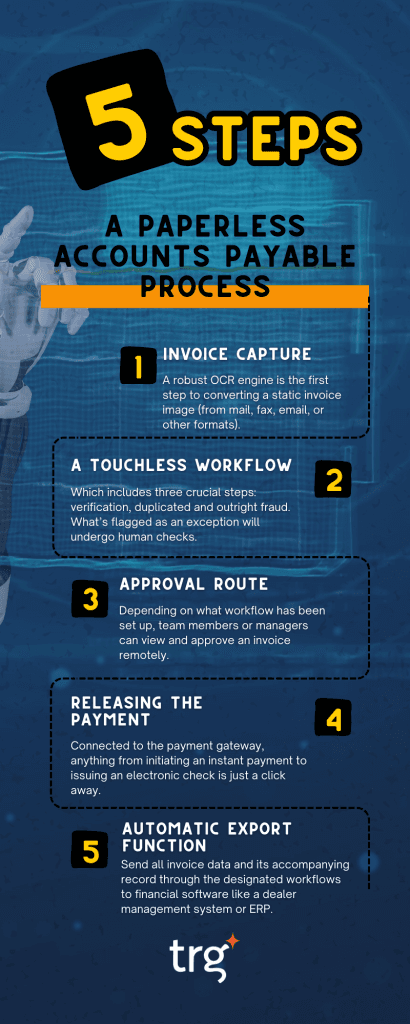
Yooz offers an all-in-one, cloud procure-to-pay automation solution to help businesses optimise not just invoice management but also the entire accounts payable process. The solution can be seamlessly integrated with 250+ ERP platforms, ensuring undisrupted data flow throughout the organisation.
This solution frees up your staff from repetitive and manual tasks during the workday while also improving security and control.
Read more:You’re Losing Money on Manual Invoice Processing! Here’s A Solution
Additionally, there is no need to worry about getting your staff up to speed. TRG International offers a comprehensive e-learning platform —TRG Academy—that provides step-by-step training, ensuring everyone can make the most out of Yooz.
Conclusion
Once businesses adopt a paperless solution into their operations, it is not only an effective way to reduce carbon emissions but also a critical step toward achieving overall sustainability.
Sustainability does not need to be complicated. By opting for a cloud-based solution like Yooz, your business’ transition to a paperless environment can be more efficient, streamlined, and certainly, cost-effective.
Would you consider participating in this arena? Why not?

References:
- https://guides.library.illinois.edu/green-libraries/purchasing/paper#:~:text=The average office worker uses,half of U.S. paper production.
- https://cleanstreets.westminster.gov.uk/blog/how-to-recycle-office-paper-and-improve-business-sustainability#:~:text=Paper is a valuable natural,than to create new paper.