

The ASEAN logistics sector stands at an inflexion point. Driven by e-commerce growth, technological transformation, and shifting trade patterns, the market is on course to double in size by 2033. Yet alongside this opportunity comes a more complex operating environment, one shaped by fuel volatility, tightening sustainability regulations, and the ongoing digitisation of supply chains.
Understanding these forces is essential for any logistics business planning for the decade ahead.
This just in on the recent U.S.-Iran conflict that leads to a full-fledged polycrisis: What Are the Possible Scenarios for Oil Prices Next?
Mapping the ASEAN logistics outlook
The global logistics sector is undergoing a period of structural expansion, with the market projected to grow from approximately USD 10.2 trillion in 2023 to USD 20.1 trillion by 2033, reflecting a compound annual growth rate of 7.3%. This trajectory is being shaped by five interconnected forces:
- Technological advancement
- E-commerce growth
- Rising fuel costs
- Sustainability pressures
- And shifting trade patterns
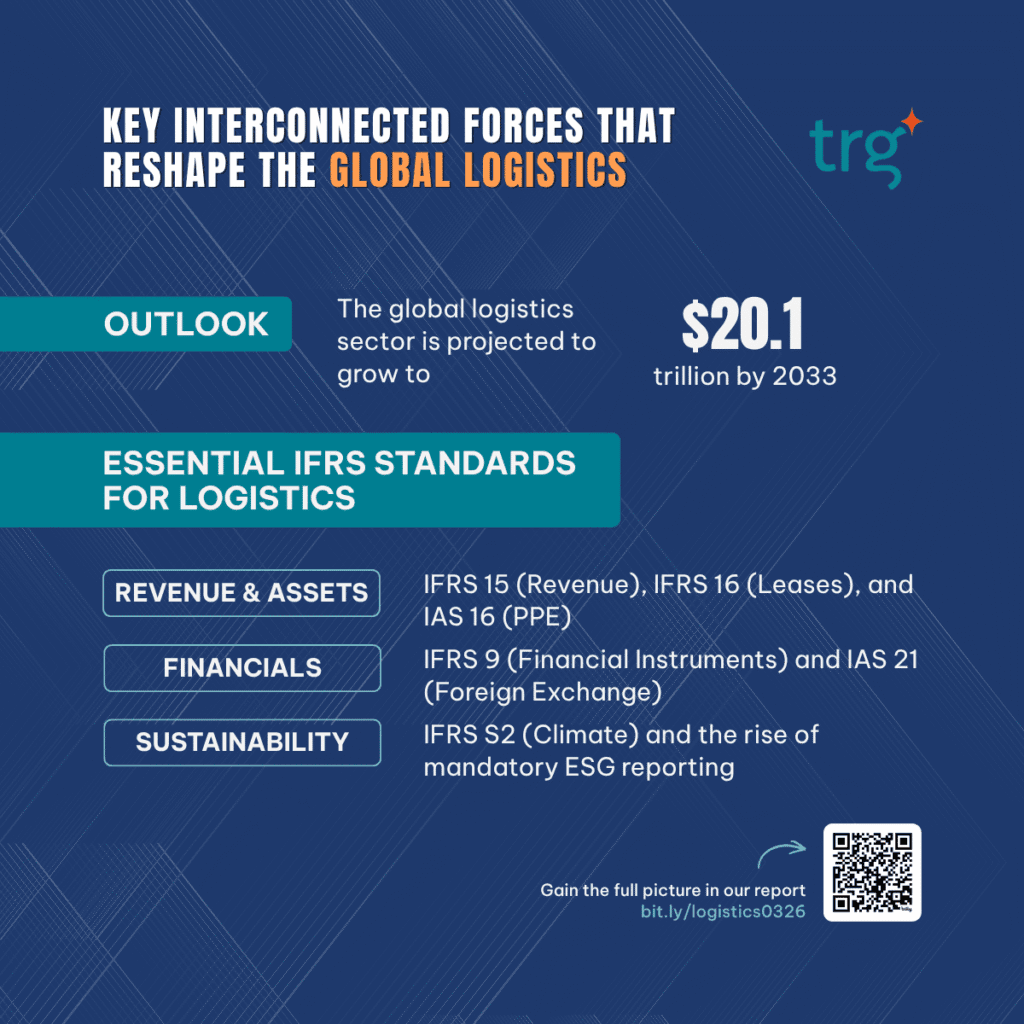
Quickly grasp important insights with our downloadable infographic here!
Unstoppable technology advancements & e-commerce growth
Increasing use of artificial intelligence, data-driven forecasting tools, and automated handling equipment is streamlining workflows, strengthening decision-making, and lowering operational costs. These advancements are arriving alongside an e-commerce boom that is fundamentally reshaping logistics requirements. Most notably, global online retail sales are forecast to reach approximately USD 7.4 trillion by 2025 (1).
In Southeast Asia, this growth is especially pronounced. The regional e-commerce logistics market, valued at around USD 10.25 billion in 2025, is expected to reach USD 18.33 billion by 2030 (CAGR of 12.32%) (2). Country-level data illustrate the scale of this shift: in Thailand, Internet usage exceeds 91%, and nearly 70% of consumers prefer online purchasing over physical retail, well above the global average of 56% (4). Large-scale digital platforms such as Temu and Shein are further amplifying cross-border air freight volumes through business models that rely on rapid international shipping cycles (3).
Together, these forces are driving investment in modern warehouse infrastructure, advanced digital tracking, and more adaptable delivery approaches to manage higher volumes and tighter service expectations (5).
Rising fuel costs
Road transport remains the dominant mode of goods movement in ASEAN, accounting for an estimated 68.5% of logistics revenue in 2024. This dependence on fuel-intensive trucking makes the sector highly sensitive to fluctuations in diesel and petrol prices, whether driven by global supply and demand, geopolitical tensions, or shifts in energy policy (6).
Thailand clearly illustrates the sector’s underlying exposure. The country has kept domestic diesel prices stable at roughly 32 baht per litre through its national oil fund subsidy, temporarily easing cost pressures (7). However, if subsidies are scaled back or global fuel prices continue to rise, operating expenses could increase sharply, placing significant financial strain on logistics businesses.
Use our Free Calculator to see exactly how much capital is leaking through manual invoice handling.
Calculate My Recovery Margin →
Sustainability pressures
Transport, warehousing, and related activities account for an estimated 11% of global CO₂ emissions, prompting governments and industry leaders to adopt more ambitious decarbonisation targets (8). Over 36 countries have committed to transitioning to 100% zero-emission truck sales by 2040, accelerating investment in electric vehicles, alternative fuels, and energy-efficient supply chain systems.
Environmental measures that were once considered optional, such as electric delivery vehicles, route-optimisation software, lower-impact packaging, and carbon-offset programs, are increasingly becoming standard practice. By 2025, roughly three-quarters of logistics firms worldwide are expected to have active carbon-reduction or carbon-neutral initiatives in place, with sustainability now a central pillar of long-term strategy for major players (9).
Logistics companies are also directing more resources toward reducing emissions through electric and hydrogen-powered fleets, renewable-energy-based facilities, and lower-impact packaging solutions. These efforts align with stricter regulatory requirements and growing expectations from customers, investors, and governments for stronger sustainability performance.
Industry Alert: Why Going Green Is Not That Straightforward for Hospitality Businesses and Here’s Why
Shifting trade & supply chains
Geopolitical shifts and post-pandemic normalisation are reshaping trade flows. Recent data show that China now exports more goods to Southeast Asia than to either the United States or Europe, signalling a shift in Asiacentric trade flows (10).
At the same time, many Western manufacturers are adopting “nearshoring” and “China-plus-one” strategies, relocating parts of their supply chains to ASEAN economies such as Thailand and Vietnam to reduce exposure to geopolitical uncertainty (11, 12).
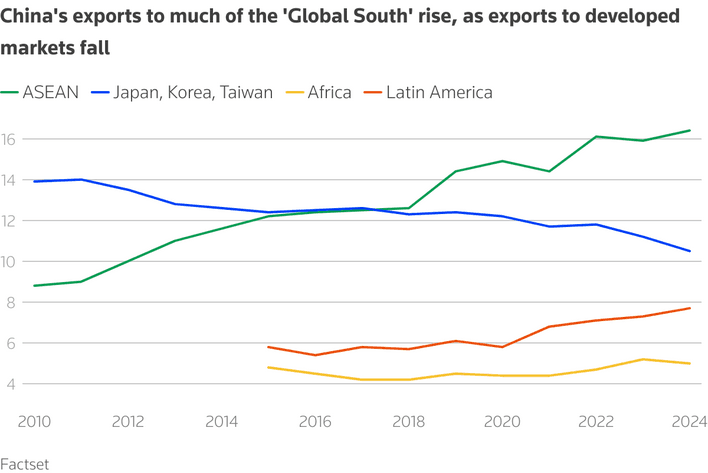
Source: Ministry of Industry and Trade (10)
These changes are increasing the movement of intermediate goods, components, and raw materials within the region, placing new demands on cross-border transport networks, multimodal connectivity, and regional warehousing capacity. They also highlight the growing importance of ASEAN as both a production base and a logistics hub, with countries positioning themselves to capture more value from regionalised supply chains.
More insights and detailed analysis can be found in our recent research paper, “Driving Financial Efficiency in Logistics: Digitalisation, Automation and Compliance for Sustainable Growth”.
Post-pandemic supply chain digitisation trend
The pandemic highlighted major weaknesses in global supply chains and pushed companies to accelerate digital transformation across logistics functions.
Since 2020, organisations have widely adopted technologies that provide greater transparency and operational control. Many implemented supply chain “control tower” systems, IoT-based tracking devices, and cloud platforms that allow real-time monitoring of cargo and early detection of potential disruptions (13).
Industry surveys show that this shift has been significant. Recent McKinsey research indicates that a large majority of enterprises are investing extensively in AI and advanced analytics, with widespread adoption and strong plans for continued investment (14).
Early adopters report measurable improvements, including reductions in logistics costs of around 15%, inventory optimisation gains of roughly 35%, and service-level improvements of up to 65% due to better forecasting and automated workflows (4).
ASEAN markets have followed a similar trajectory. The need for faster, contact-free processing encouraged governments and businesses to digitise core procedures. Electronic customs clearance and National Single Window systems have replaced many paper-based processes; for example, Singapore’s Networked Trade Platform and Thailand’s updated e-customs portal (15).
Smaller logistics firms, which previously relied largely on manual processes, are gradually adopting Transportation Management Systems, digital procurement tools, and electronic payment platforms to remain competitive (16, 17). Still, the drive for efficiency and resilience continues: companies are now digitising end-to-end, from warehouse robotics to blockchain tracking for transparency (18).
Overall, the post-pandemic logistics landscape is far more data-centric, with integrated IT systems linking suppliers, carriers, and customers to support faster, more resilient, and more accurate supply chain operations (19, 20, 21).
Compliance and regulatory landscape
Key Logistic IFRS/TFRS Standard
| Standard (IFRS / TFRS) | Application in logistics | Example |
| IFRS 15 / TFRS 15 – Revenue from Contracts with Customers | Sets out the five-step model for recognising revenue from customer contracts. Logistics providers must identify performance obligations (for example, transport and warehousing services), determine the transaction price including variable consideration, allocate this price to each obligation and recognise revenue as control of the service passes to the customer. | A contract to move goods from Bangkok to Singapore is treated as a single performance obligation. Revenue is recognised over time as the transport service is performed and the customer benefits continuously. Volume rebates or on-time-delivery bonuses included in the contract are treated as variable consideration and recorded as reductions of revenue as the customer earns them. |
| IFRS 16 / TFRS 16 – Leases | Requires lessees to recognise a right-of-use (ROU) asset and a lease liability for most leases of 12 months or more. This is highly relevant for logistics, where fleets, depots, containers and handling equipment are often leased. The standard changes the profile of expenses, increasing reported assets and liabilities. | A trucking operator signs a five-year non-cancellable trailer lease. At commencement, it measures the present value of future lease payments and records this as both an ROU asset and a lease liability. The ROU asset is depreciated over the lease term, and interest is recognised on the liability, replacing the former straight-line rental expense. |
| IAS 16 / TAS 16 – Property, Plant and Equipment (PPE) | Governs accounting for owned logistics assets such as trucks, forklifts, conveyor systems, warehouses and certain IT hardware. It provides rules for initial recognition, subsequent measurement, depreciation and impairment testing of PPE. | A logistics firm constructs a cross-dock warehouse. Construction costs and directly attributable expenses are capitalised as PPE. The asset is depreciated over its estimated useful life, and its carrying amount is reviewed for impairment if utilisation falls sharply or market conditions change. |
For detailed information on 3 additional standards:
- IFRS 9 / TFRS 9 – Financial Instruments
- IAS 21 / TAS 21 – Effects of Changes in Foreign Exchange Rates
- and IFRS S2 / (forthcoming) TFRS S2 – Climate-related Disclosures
Download our whitepaper today→
ESG, sustainability reporting, and green logistics trends
Expectations around Environmental, Social, and Governance (ESG) performance are rising across the logistics sector.
Regulators, investors, and major customers now require greater transparency in sustainability metrics, making ESG reporting a central responsibility for finance and compliance teams (22).
The introduction of the ISSB’s IFRS S2 Climate-Related Disclosures significantly raises the bar: companies must report greenhouse gas emissions across Scopes 1, 2, and 3 and explain how climate-related risks may affect cash flows, operations, or cost of capital (23). These requirements are particularly relevant for logistics firms because transport and warehousing activities account for a substantial share of global supply-chain emissions.
Did you know? Accounting & ESG are a winning combo?
Research indicates that freight movement and storage account for at least 7% of global greenhouse gas emissions, placing logistics companies under increasing pressure to adopt lower-emission operating models. This shift has accelerated the development of “green logistics,” with firms investing in electric and hydrogen-powered vehicles, alternative fuels, route-optimisation technologies, energy-efficient warehousing, and carbon-management programmes.
Market sentiment is also shifting, with nearly half of institutional investors prioritising low-carbon transition strategies, and many shippers report a willingness to pay more for cleaner transport options. Analysts estimate that demand for sustainable logistics solutions could reach USD 350 billion by 2030, representing about 15% of total logistics spending. (24)
These trends have implications for financial management. Logistics CFOs must now measure and report new operational and ESG indicators – such as CO₂ per ton-kilometre, energy use, fleet fuel efficiency, and workforce safety statistics and integrate these into financial statements, sustainability reports, and internal dashboards.
ESG outcomes are increasingly linked to financial results, affecting access to capital, customer contracts, and regulatory compliance. Poor visibility into emissions or sustainability risks can expose companies to compliance failures, reputational damage, and weaker investor confidence.
In summary, financial management in logistics has expanded well beyond traditional accounting. It now requires adherence to complex IFRS/TFRS standards and proactive management of ESG performance. Organisations that build the capability to meet these requirements through better data systems, integrated reporting, and low-carbon strategies are better positioned to remain compliant, competitive, and trusted in a rapidly evolving regulatory landscape.
Gain the full picture in our report. Get a FREE copy today!
References:
1. https://www.dialectica.io/community-hub/logistics-in-overdrive-the-trends-shaping-global-supply-chains-in-2025
2. https://www.mordorintelligence.com/industry-reports/asean-e-commerce-logistics-market
3. https://www.kearney.com/service/operations-performance/state-of-logistics-report
4. https://www.fedex.com/en-jp/business-insights/ecommerce/thailand-logistics-hub-growth.html
5. https://www.researchgate.net/publication/381168714_Evolution_of_E-Commerce_Logistics_Global_Trends_and_Implementations
6. https://www.mordorintelligence.com/industry-reports/asean-freight-and-logistics-market
7. https://www.nationthailand.com/news/general/40057238
8. https://www.weforum.org/stories/2025/07/emerging-economies-global-green-logistics-development/
9. https://maskuralogistics.com/global-logistics-trends-and-challenges
10. https://vntr.moit.gov.vn/news/asean-faces-challenges-as-china-shifts-its-trade-focus
11. https://www.kearney.com/service/global-business-policy-council/global-economic-outlook/2025-2027
12. https://www.abiresearch.com/blog/why-southeast-asia-is-key-to-a-china-plus-one-strategy
13. https://www.kearney.com/documents/291362523/291370242/Global%2Blogistics%2Bcontrol%2Btowersboosting%2Bsupply%2Bchain%2Bsustainability%2Band%2Bresilience.pdf/3b087564-212f-030e-2298-f6bb8703b9e4?t=1618205576000
14. https://www.mckinsey.com/capabilities/quantumblack/our-insights/the-state-of-ai
15. https://www.weforum.org/stories/2024/06/southeast-asia-asean-affordable-cross-border-delivery-service/
16. https://www.shipmercury.com/blog/smes-logistics-technology-industry-giants
17. https://www.dhl.com/discover/en-vn/small-business-advice/growing-your-business/dhl-express-logistics-services-to-overcome-issues
18. https://www.researchgate.net/publication/392622626_Blockchain_in_Supply_Chain_Transparency_A_Conceptual_Framework_for_RealTime_Data_Tracking_and_Reporting_Using_Blockchain_and_AI
19. https://docshipper.com/logistics/ai-changing-logistics-supply-chain-2025/
20. https://3plogistics.com.vn/news/logistics-40-%E2%80%93-digital-transformation-transport-industry
21. https://www.freightamigo.com/en/blog/logistics/future-trends-in-e-commerce-logistics-post-pandemic/