
People are the greatest asset of a company. This also explains why the Chief People Officer (CPO) tends to take over the title of Chief Human Resources Officer (CHRO) (1), emphasizing a people-first approach to show companies truly care about employees, putting their well-being, happiness, and needs at the heart of everything. Management focus goes beyond policy and regulations – companies aim to improve their employees’ engagement and their culture with a positive working environment.
Therefore, the rise of implementing Artificial Intelligence (AI) in recruitment and operations raises questions about the lack of empathy or like-mindedness.
Can AI replace the human touch?
Read more:It’s Time to Rethink Your Succession Planning Strategies
Key applications of AI in human resources functions
Undeniably, AI is no longer just a tool—it is the future where the whole department’s operations could be fully automated. A world where talent is sourced, evaluated, onboarded, and trained without human involvement is not science fiction.
A late-2023 IBM survey (2) of more than 8,500 global IT professionals showed 42% of companies were using AI screening “to improve recruiting and human resources.” Another 40% of respondents were considering integrating the technology. AI could be implemented in every stage of the recruitment process, and, as a result, businesses are increasingly relying on it. For example:
Pre-recruitment process
AI can help craft inclusive job descriptions by utilising the provided information about the vacant position and the company’s specific requirements. It’s a huge time-saver for talent acquisition staff.
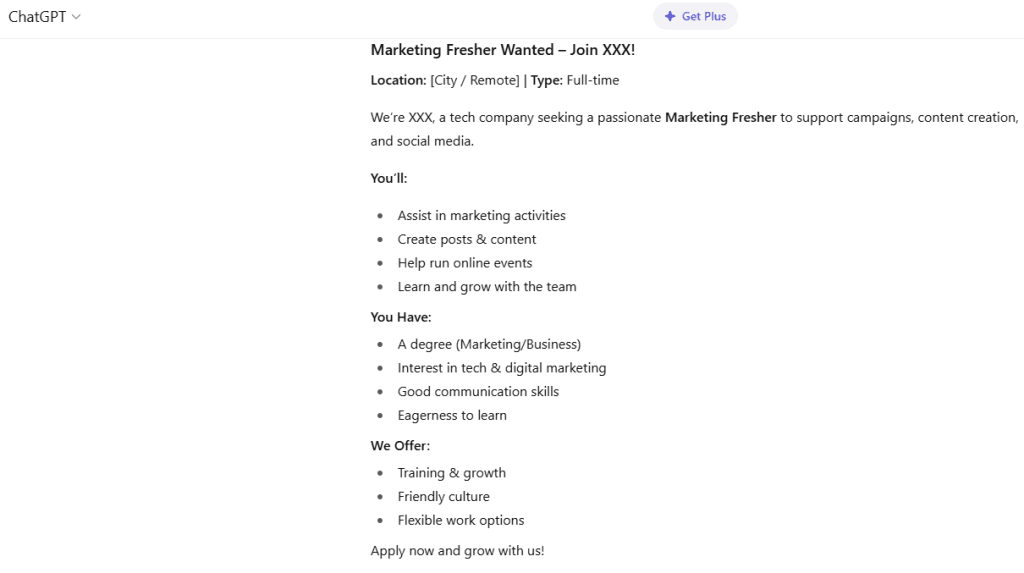
An example from ChatGPT
However, an AI-powered job description needs careful revision or editing before it is published.
During the recruitment process
At first glance, AI chatbots will definitely be useful tools for candidates when they have questions about the hiring process. This enhances the overall experience and engagement, building a positive employer brand.
AI can help with candidate sourcing, only focusing on qualified CVs and then automatically sending out email reminders to inform them about the next steps. Then, screening interviews conducted by AI can help employers evaluate candidates’ communication skills before more in-depth interviews with their direct managers or team leads. Finally, with advanced algorithms, recruiters can predict future performance, behavioral patterns, and culture fit to improve the quality of new hires.
One of the biggest global brands in the FMCG industry—Unilever (3)—has partnered with HireVue and Pymetrics to design a system of recruitment, selection, and onboarding supported by AI since 2016. Unilever saved significantly on both time and resources while improving its HR performance.
Onboarding process
AI can also be used to automate repetitive tasks, such as creating and sending tailored messages to employees at different phases of their onboarding journey to maintain their engagement. For remote working employees, it’s much more beneficial when AI can provide immediate instructions or answers to their questions, without relying on staff from different time zones or locations.
Read more:Exit Interview – From Dreaded Formalities to Strategic Gold Mines
AI and biases—A double-edged sword
It’s assumed that AI will help to exclude all the prejudice or biases that humans are unable to, to improve smarter hiring decisions, as it works based on algorithms. But is it possible when all the materials used to train AI come from users—humans with their own emotions and flaws?
A bold answer is that AI does create inequality! In an image generation test on AI conducted by Bloomberg, the result is astounding! For example, AI could return results showing that only males are doctors and all nurses are female (4). So, despite its ability to help fast-track the recruitment process, AI might also cause scandals with its algorithm bias and distorted outcomes.
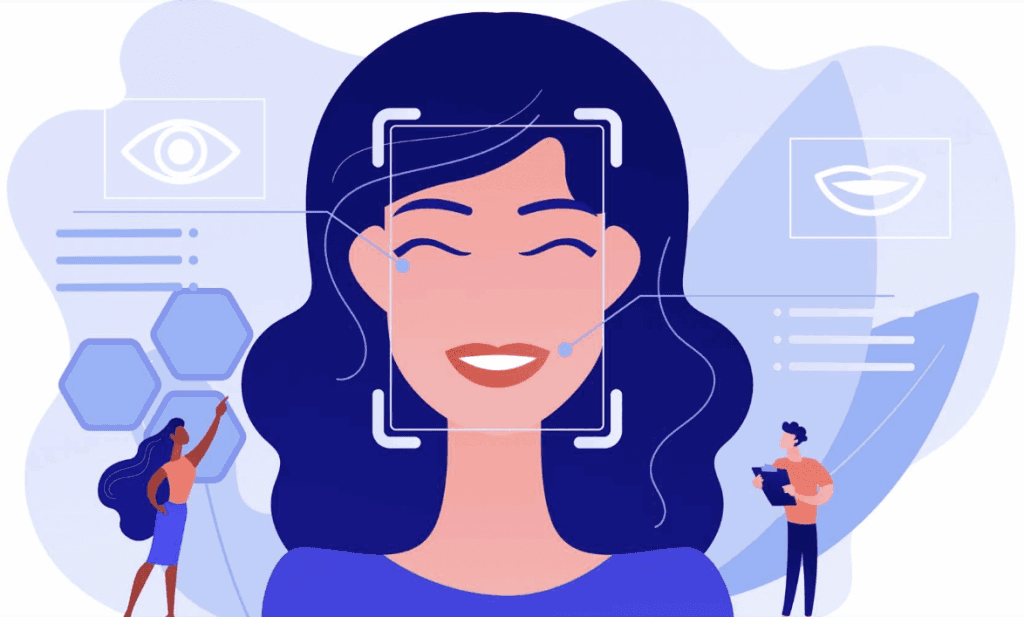
Former M.A.C Cosmetics make-up artist Anthea Mairoudhiou (5) said her company told her to reapply for her role after being furloughed during the pandemic. She was evaluated both based on past performance and via an AI-screening program. She says she ranked well in the skills evaluation—but after the AI tool scored her body language poorly, she was out of a job for good.
So, if there is no intervention now, AI could make the workplace of the future more unequal than before. A biased talent acquisition staff may impact a hundred applications, but a biased AI recruiting system causes much more negative long-term impacts.
Read more: Do We All Experience The Monday Blues Once In Our Lifetime?
How to maintain fairness, trust, and justice
Because of the complexity of AI, an algorithm can be a black box system with little insight into how it really works, especially for recruiting staff without related tech skills. The situation becomes worse when they feed AI with murky and unstructured data based on their feelings.
According to IBM, identifying and addressing bias in AI requires AI governance, or the ability to direct, manage, and monitor the AI activities of an organization [6]. In practice, AI governance creates a set of policies, practices, and frameworks to guide the responsible development and use of AI technologies.

Here’s a checklist suggested by IBM for keeping AI programs free of bias. Tips to help you not miss out on your potential talents:
- Pick the right learning model: Supervised models rely on diverse, well-trained teams to select the right data. Unsupervised models need built-in bias detection tools, so the AI can recognize bias itself.
- Use the right data: Feeding AI with incomplete or unbalanced data will lead to inaccurate results. The data should accurately reflect the demographics of the group you’re targeting.
- Build a diverse team: A varied team—different races, backgrounds, genders, and roles—helps spot bias more effectively. Include people from all parts of the process, from innovators and creators to users.
- Be careful during data processing: Bias can sneak in at any stage—whether in selecting data, preprocessing, or post-processing—so be mindful throughout.
- Keep monitoring: AI isn’t a “set and forget” system. Regular checks with real-world data help catch and fix bias early. Independent reviews, either internal or third-party, add extra safeguards.
- Watch out for infrastructure issues: Sometimes, technical problems—like faulty sensors—can introduce bias. Investing in good technology helps prevent these hidden biases.
Read more: Why Are We Procrastinating At Work?
Final words—Do not be overhyped about AI
Recruiting teams may benefit from AI—save time on repetitive manual tasks and gain more insights from various perspectives just using one prompt to complete their final goal, which is to onboard the most suitable members for companies.
However, once again, as mentioned, following people-centric strategies is managing people with heart, not only by policy and regulations. AI cannot replace the human touch, while attracting and nurturing talents needs human interaction, empathy, and mutual understanding.
So, what happens when your newcomers complete their probationary period? Whether they become official employees or not, it would be great if you could provide them with valuable feedback to support their future growth. Here’s what you’re looking for.

References:
- https://zelt.app/blog/chief-people-officer-cpo-vs-chief-human-resources-officer-chro/
- https://newsroom.ibm.com/2024-01-10-Data-Suggests-Growth-in-Enterprise-Adoption-of-AI-is-Due-to-Widespread-Deployment-by-Early-Adopters
- https://www.researchgate.net/publication/373763740_Unilever%27s_Practice_on_AI-based_Recruitment
- https://www.ibm.com/think/topics/ai-bias
- https://news.sky.com/story/companies-increasingly-using-ai-for-recruiting-and-why-it-could-cost-you-your-job-13060905