

Commoditisation and shrinking profit margins are the challenges facing manufacturers and distributors today. They also have to protect their market shares in the high competitiveglobal environment. Therefore, they increasingly turn to service offerings in order to stand out from the other competitors.
What is servitization?
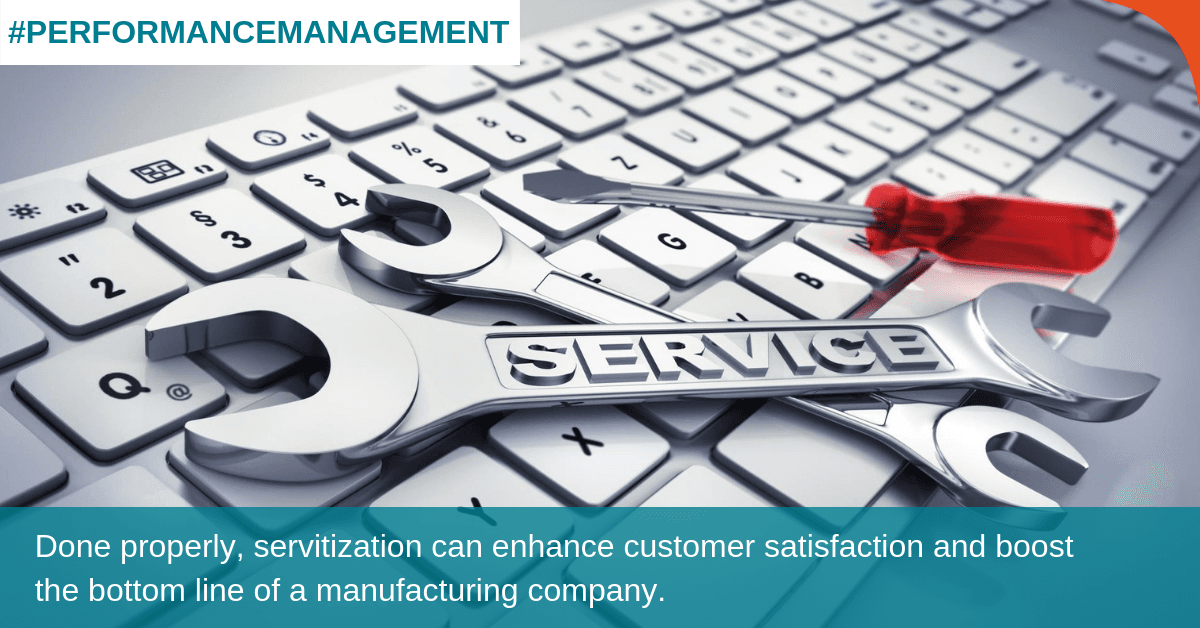
Servitizationis the abilities of a manufacturing company to control all services related to their products and offer them directly to customers. Done properly, servitization can enhance customer satisfaction and boost the bottom line of a manufacturing company.

In the servitization model, the transaction does not end at the point of sale. The company instead takes the responsibility for product performance and maintenance throughout its lifecycle, which can be a risky business.
Servitization is about:
- Combining products and services
- Moving away from one-time transactions
- Creating recurring revenue using subscription-based transactions
How to turn service-based offerings into a key differentiator and a source of revenue?

How to get started with servitization
The foundation of servitization is a highly functioning maintenance or field service operation. In discrete manufacturing, servitization can start with a field service team tackling everything from set-up and calibration to service contracts, warranty claims, and emergency break-fix repairs.
In process manufacturing, such as the food and beverage industry,servitization can start right from the farm, where sensors help manage facilities like the irrigation system and make decisions when to feed livestock.
At the processing plants, the top challenge is the maintenance of plant assets and equipment to ensure smooth operations without delays. Sensors can be used to detect early warning signs of equipment failure.
Read more:What is Additive Manufacturing?
6 steps to make your organisation service-centric
If you have a plan to make your organisation service-centric, you should consider these 6 steps:
- Completecustomer visibility: You need a complete view of the customer, past and likely future purchases, account status and so on. Additionally, visibility from orders to delivery ensures a commitment to putting the customer first and improving customer experience.
- Services contracts: The manufacturer must haveadequateresources such as technicians, tools, service fleet, and parts inventory.
- Preventive care: Your organisation should have technology systems to control performance and predict maintenance requirements. Data from sensors and being proactive are essential in this step. The former keeps the shop floor operate without any problems, the later helps find out early warning signs.
- Parts and assets in inventory: The services operation needs the replacement parts. Predictive analytics will enable accurate demand forecast and help avoid excessive parts inventory.
- Service-centric culture and streamlined field service processes: The manufacturing company has to recruit, train, and retain a skilled workforce who have a customer first mindset. The service operation must remain efficient to keep the call desk, service centre, and schedule/dispatch operating smoothly.
- Advanced BI: advanced business intelligence solutions with predictive analytics will be necessary so youcan finetune needs, demands, supply chain trends, and respond with insightful decisions.